Table of Contents
- Comparing Your Options: Ground Transport vs. Air Cargo
- What It Actually Costs to Move Pets Cross Country
- Interstate Pet Travel Requirements and Paperwork
- How to Prepare a Dog for a Long Car Ride
- Breed Restrictions and Climate Risks That Change Your Plan
- Managing Travel Anxiety and Emergencies in Transit
- Settling In: The First Two Weeks After You Move Pets Cross Country
- Conclusion
- Frequently Asked Questions
Last Updated: October 7, 2026
Comparing Your Options: Ground Transport vs. Air Cargo
Choosing between driving your pet yourself and booking air cargo is the single biggest decision in any long-distance move, and the right answer depends on distance, your pet’s health, and your budget. Driving gives you control and keeps your pet beside you.
This guide from The Pet Transport Network LLC breaks down the best ways to move pets cross country in 2026, from paperwork to post-move settling in. We connect pet parents with vetted independent transporters and established transport companies, so you can compare verified options instead of guessing.
Below, we’ll show you exactly how to decide between driving and flying, what the paperwork demands, and how to keep your pet calm through it all.
When Driving Makes Sense
Driving usually wins for moves under roughly 1,000 miles, for pets who hate crates or loud noises, and for multi-pet households. You control rest stops, temperature, and feeding schedules. Most veterinarians recommend stopping every two to three hours so your dog can stretch, drink, and relieve itself.
The trade-off is time and driver fatigue. A cross-country drive can take four to six days with a pet, and you’ll need pet-friendly lodging booked in advance. If your schedule is tight, driving stops being practical fast.
When to Hire Professional Pet Transport Companies
Professional pet transport companies make sense when distance, work schedules, or a pet’s medical needs rule out a DIY drive. These services handle the driving, feeding, and overnight care, and many offer door-to-door delivery.
The catch is verification. Ask any provider for proof of insurance, USDA registration where applicable, and references. The Pet Transport Network LLC vets independent transporters before listing them, which removes most of that legwork for you.
| Factor | Drive It Yourself | Hire a Transporter | Air Cargo |
|---|---|---|---|
| Best for | Short moves, anxious pets | Long moves, tight schedules | Very long distances |
| Pet supervision | Constant | Scheduled checks | Limited |
| Typical duration | 4-6 days | 2-5 days | Same day |
| Paperwork burden | You handle it | Provider assists | You handle it |
What It Actually Costs to Move Pets Cross Country
Budgeting for cross-country pet relocation is where most guides go quiet, and it’s the question pet owners ask first.
Start by separating your costs into three buckets: fixed costs you pay once, per-day costs that grow with trip length, and variable costs tied to your pet’s size and needs.
Fixed costs (paid once, regardless of distance)
- Veterinary exam and Certificate of Veterinary Inspection
- Rabies and other vaccination updates
- Microchip registration or update
- Travel crate or carrier sized to your pet
- Pet travel kit (bowls, harness, waste bags, records copies)
Per-day costs (grow with trip length)
- Lodging pet fees at pet-friendly hotels, which are typically charged per night per pet
- Your own food and fuel if you drive
- Boarding or overnight care if a transporter handles the trip
Variable costs (scale with distance, pet size, and service level)
- Transport fee for a professional ground transporter, which usually reflects mileage, crate size, and whether service is door-to-door or terminal-to-terminal
- Air cargo fee, which is quoted by the airline based on the combined weight of pet and crate plus the route
- Oversized or specialty crate surcharges for large or giant breeds
- After-hours pickup, weekend delivery, or extended boarding add-ons
A few pricing mechanics are worth understanding before you request quotes.
Ask every provider for a written, itemized quote before you commit. A quote that lumps everything into one number usually hides add-on fees for after-hours pickup, oversized crates, or extended boarding. Compare quotes line by line, not by the bottom-line total.
Two cost traps catch most people. First, treating the transport fee as the whole budget and forgetting the veterinary and paperwork costs, which are paid separately and often weeks earlier. Second, booking the cheapest quote without confirming what it excludes, then paying more in add-ons than the difference between quotes would have been.
Pricing depends on distance, dates, crate size, and service level, so we recommend requesting a quote from The Pet Transport Network LLC’s verified providers rather than estimating from a generic average.
Interstate Pet Travel Requirements and Paperwork
Interstate pet travel requirements center on one document: a Certificate of Veterinary Inspection, often called a health certificate. Most states require it within a set window before travel, and airlines and ground transporters will ask for it at booking.
Here’s what to gather before you move pets cross country:
- Current rabies vaccination record signed by a licensed veterinarian
- Certificate of Veterinary Inspection issued shortly before departure
- Microchip confirmation with your pet’s chip number and registry
- Acclimation certificate if your pet travels in temperature extremes
- Destination state’s specific rules, some states add testing or permit requirements
The USDA Animal and Plant Health Inspection Service pet travel guidance outlines federal requirements and links to state-specific rules. Check it before you book anything, because requirements change and vary by destination.
Skipping the health certificate because “it’s just a car trip” is a costly mistake. Airlines and many transporters will refuse boarding, and you may lose a nonrefundable deposit.
How to Prepare a Dog for a Long Car Ride
Preparing a dog for a long car ride starts weeks before departure, not the morning you leave. The goal is to make the car and the crate feel normal, so the actual trip is boring rather than terrifying.
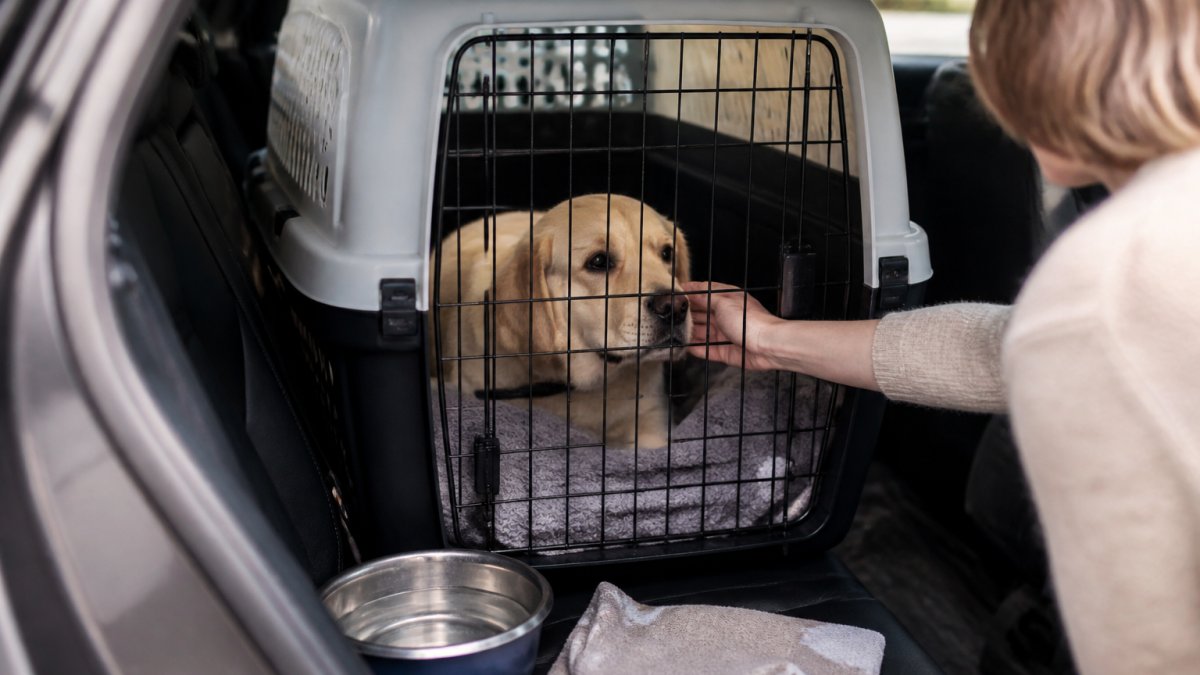
Start with short drives around the block, then lengthen them over several days. Feed your dog in the crate at home so it associates the space with good things.
A common mistake is sedating a pet for the drive without veterinary guidance. Sedation can mask breathing problems and interfere with balance. Talk to your veterinarian about whether any medication is appropriate for your specific dog.
Crate Training and Carrier Acclimation Before the Trip
Crate training and carrier acclimation are the same project: teaching your pet that the carrier is a safe den. Leave the crate open in a common room for a week before you start closing the door. Toss treats inside, feed meals there, and never use the crate as punishment.
For cats, cover the carrier with a light towel during loading to reduce visual stress. For dogs, practice entering and exiting on command so loading day isn’t a wrestling match.
Breed Restrictions and Climate Risks That Change Your Plan
Why breed restrictions exist
Airlines restrict or refuse brachycephalic, or flat-faced, breeds because their shortened airways make breathing difficult under stress, heat, or the reduced air pressure of a cargo hold.
Restrictions are not uniform. Some airlines ban these breeds from cargo entirely, some allow them only in the cabin, and some require an acclimation certificate signed by a veterinarian.
The rule that governs air cargo
Airlines transporting pets as cargo in the United States operate under the Department of Transportation’s animal transport rules, which set standards for ventilation, temperature, and handling. The USDA Animal and Plant Health Inspection Service pet travel guidance covers federal health and movement requirements, while the airline’s own tariff governs breed and temperature limits.
How temperature embargoes actually work
Most airlines will not accept a pet in cargo when the forecast ground temperature falls outside a safe range at any point on the itinerary, including layovers and the departure and arrival cities.
Embargoes are forecast-based, so they can lift or appear within days of departure. Build a buffer into your timeline and have a ground-transport fallback ready.
How to route around a restriction
If your pet falls into a restricted category, you have four practical paths:
- Fly in the cabin if the pet meets the airline’s in-cabin size and weight limits and the breed is permitted there.
- Use ground transport in a climate-controlled vehicle, which sidesteps cargo embargoes and breed bans entirely.
- Drive it yourself with a properly secured crate and planned rest stops.
- Shift your travel window to a season or time of day when temperatures stay inside the safe range.
A verbal assurance at booking is not a policy. Get the breed and temperature rule in writing, with your pet’s breed and your travel dates named, before you pay a nonrefundable deposit.
Owners of flat-faced breeds, senior pets, or pets with heart conditions who need a transporter experienced with higher-risk animals and climate-controlled vehicles.
Confirm restrictions in writing before you pay a deposit, and treat the temperature window as a scheduling constraint rather than a detail to sort out at the last minute.
Managing Travel Anxiety and Emergencies in Transit
Travel anxiety is manageable with preparation, and emergencies are manageable with a plan. Both start with a veterinary consultation before departure, where you can discuss your pet’s temperament, any medications, and what to do if something goes wrong.
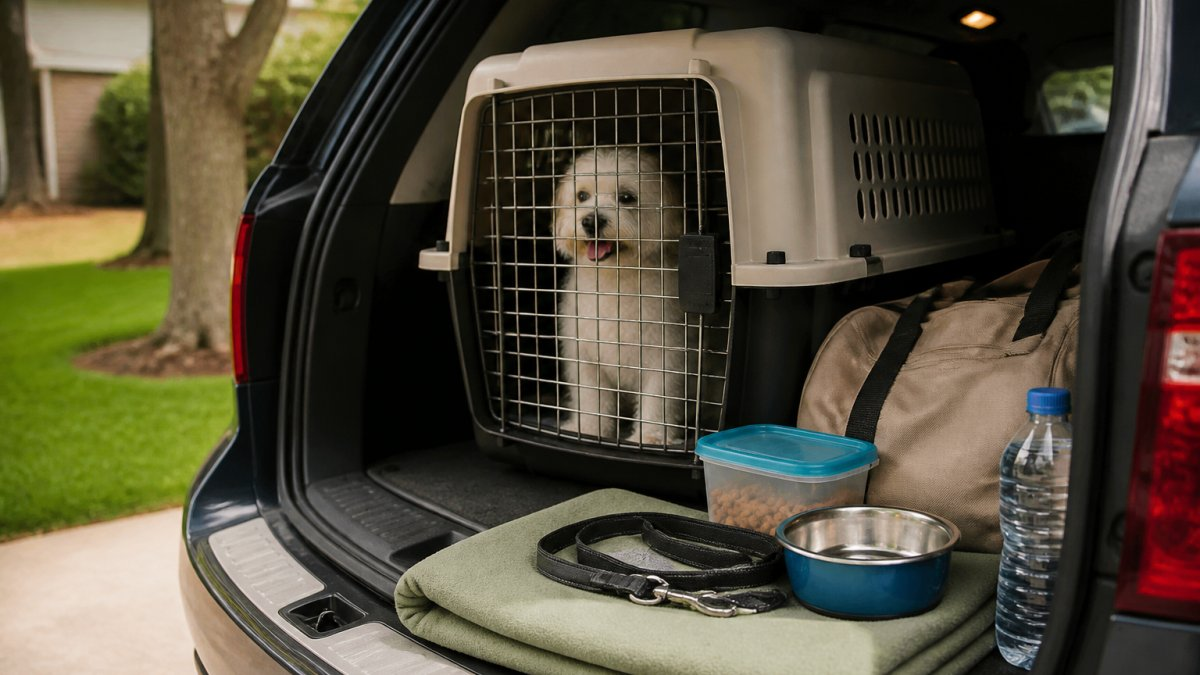
Build a pet travel kit that includes:
- Vaccination records and health certificate copies
- A recent photo of your pet
- Any prescribed medication with dosage instructions
- A collapsible bowl, bottled water, and a few days of food
- A leash, harness, and waste bags
- Your veterinarian’s phone number and the destination vet’s number
For emergencies during transit, give your transporter a written contact sheet and confirm their protocol for vet visits, delays, and after-hours problems. Ask directly who pays for emergency care and how they’ll reach you.
The best protection against a transit emergency is a written protocol agreed before pickup, not a phone number exchanged at the last minute.
Settling In: The First Two Weeks After You Move Pets Cross Country
Post-move decompression is the step almost everyone skips, and it’s where behavioral problems often start. Your pet has just lost its territory, its routines, and its familiar smells. Expect hiding, reduced appetite, and clingy behavior for the first few days.
Set up one small room with familiar bedding, food, water, and a litter box or pee pads, and let your pet decompress there before opening up the whole house. Keep feeding and walking times consistent with your old schedule. Introduce new spaces gradually over a week or two.
If your pet was transported by a professional service, ask for a handoff summary covering feeding times, bathroom breaks, and any stress signals the driver noticed. That information shortens the adjustment period considerably.
Conclusion
Moving a pet across the country is a logistics problem with real consequences if you get the paperwork or the timing wrong.
At The Pet Transport Network LLC, we connect you with vetted independent transporters and established transport companies so you can compare verified options and book with confidence.
Get started with The Pet Transport Network LLC and give your pet a safe, verified journey to its new home.
Frequently Asked Questions
Is it better to fly or drive when you move pets cross country?
It depends on your pet’s temperament and breed. Driving lets you control temperature, stop for rest breaks, and keep your pet beside you, which suits anxious animals and flat-faced breeds that struggle with air cargo. Flying is faster and often the only option for very long distances, but it requires a health certificate, an airline-approved crate, and careful timing around heat embargoes. Many owners split the difference by driving short legs themselves and hiring professional pet transport companies for the rest.
What documents do I need for interstate pet travel requirements?
Most states require a current rabies vaccination certificate, and many ask for a health certificate issued by a licensed veterinarian within 10 days of travel. Keep vaccination records, microchip registration, and a recent veterinary exam summary in a folder you carry with you. Airlines and professional pet transport companies will ask for copies before pickup. Rules vary by state and by carrier, so confirm the exact paperwork with your vet and your transporter at least two weeks before departure.
How far in advance should I book professional pet relocation services?
Book at least three to four weeks ahead for domestic moves, and six to eight weeks for international relocations or peak summer travel. Reputable providers fill their schedules quickly, and you need lead time for the veterinary exam, health certificate, and crate acclimation. If you are moving on military orders or during a holiday window, start earlier. Waiting until the last week often means fewer available drivers and higher rates.
What is the 3-3-3 rule for pets after a move?
The 3-3-3 rule describes the adjustment timeline many pets follow after a big change. The first three days are usually about feeling overwhelmed, so keep things quiet and let your pet hide if it wants. By three weeks, most pets start settling into a routine and showing their personality again. Around three months, they typically treat the new place as home. Stick to familiar feeding times, walks, and bedding to speed up each stage.