Table of Contents
- Verified Pet Transport: What the Term Actually Covers
- How to Verify a Pet Transport Company Before Booking
- Questions to Ask a Pet Transport Company
- Pet Transport Insurance and Liability: What You Need to Know
- Pet Transport Safety Checklist for Your Peace of Mind
- Red Flags and Misleading Verification Claims
- Frequently Asked Questions
Last Updated: October 11, 2026
Verified Pet Transport: What the Term Actually Covers
When you book a pet transport service, “verified” sounds reassuring. But what does it actually mean? The term gets thrown around by companies claiming different credentials, certifications, and background checks.
At The Pet Transport Network LLC, we help pet owners navigate this confusing landscape.
The difference between verified and unverified transport often comes down to liability. If something goes wrong, your pet gets sick, injured, or lost during transport, an unverified provider may have no insurance to cover costs.
How to Verify a Pet Transport Company Before Booking
Verifying a pet transport company takes work, but it’s the only way to know you’re hiring someone legitimate. Start by checking three core areas: registration status, insurance, and safety history. Each one tells you something different about whether a company is truly trustworthy.

Check USDA Registration and State Licensing
The U.S. Department of Agriculture requires certain pet transport businesses to register if they move animals across state lines or handle a high volume of shipments. However, not every small operator needs USDA registration, the rules depend on the type of transport and frequency.
What matters more is state licensing. Each state sets its own rules for pet transport. Some require a specific transport license. Others regulate it under general commercial licensing.
To verify registration and licensing:
- Visit the USDA’s Animal and Plant Health Inspection Service website to search for registered transporters
- Contact your state’s Department of Agriculture to confirm licensing requirements
- Ask the transport company directly for proof of registration or license
Confirm Insurance and Bonding Status
Insurance is the critical difference between a verified and unverified transporter. A bonded transporter carries liability insurance that covers your pet if something goes wrong during transport.
Ask the transport company for proof of:
- General liability insurance (covers accidents and injury claims)
- Cargo liability insurance (covers loss or damage to cargo, including pets)
- Worker’s compensation insurance (if they employ staff)
Request a Certificate of Insurance naming you as an interested party. Legitimate companies provide this without hesitation. If a transporter refuses or delays, that’s a red flag. Insurance proves they’re serious about accountability and can actually pay claims if needed.
Review Background and Safety Records
A verified transporter should have a clean background and safety history. This means no criminal convictions related to animal abuse or neglect, no serious vehicle violations, and no history of complaints with consumer protection agencies.
How to check:
- Search the transporter’s name on your state’s consumer protection website
- Check the Better Business Bureau for complaints and ratings
- Ask for references from recent clients and actually call them
Ask the transporter directly about their safety record and experience. How many animals have they transported? What’s their accident history? How long have they been in business?
Questions to Ask a Pet Transport Company
Before booking, ask these questions to gauge whether a transporter is truly verified and qualified:
- Are you USDA-registered and state-licensed? (Ask for proof)
- What insurance do you carry, and what does it cover?
- How long have you been transporting pets?
These questions reveal how prepared and professional a transporter is. Vague answers or reluctance to provide details suggests they haven’t thought through their processes, or they’re hiding something.
Pet Transport Insurance and Liability: What You Need to Know
Understanding pet transport insurance and liability protects you financially if something goes wrong. Most standard homeowner’s or pet insurance policies do not cover transport-related incidents.
Verified transporters carry liability insurance that covers:
- Injury or illness during transport
- Loss or escape of the animal
- Damage to your pet’s carrier or belongings
However, insurance has limits. If your pet has high value or special needs, ask whether the transporter offers additional coverage options.
Also understand what liability insurance does NOT cover. It typically excludes pre-existing health conditions, behavioral incidents caused by the animal, or acts of nature beyond the transporter’s control.
Pet Transport Safety Checklist for Your Peace of Mind
Before handing your pet to a transporter, verify these safety standards:
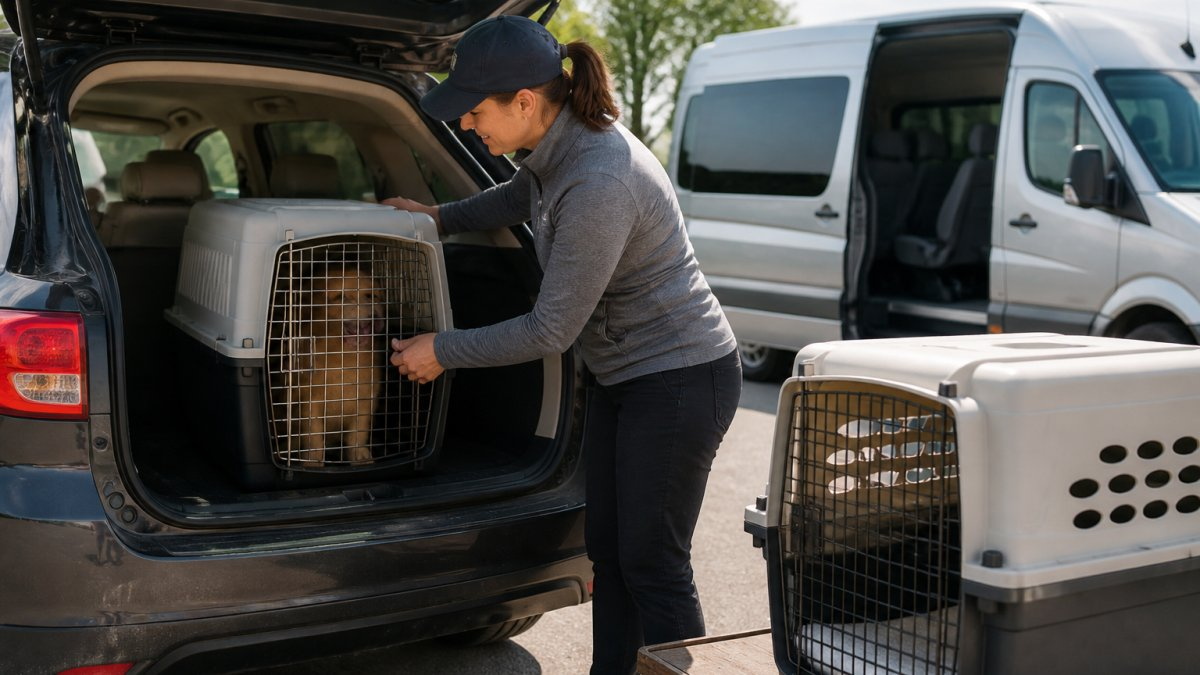
- Climate-controlled vehicle maintained at safe temperatures
- Proper ventilation and air circulation
- Secure, well-designed crates or carriers (not makeshift containers)
A verified transporter can explain how they meet each of these standards. If they brush off your questions or claim these standards don’t matter, find someone else.
Red Flags and Misleading Verification Claims
Transporters use a mix of legitimate credentials, vague claims, and marketing language to appear trustworthy. Learning to distinguish between credible evidence and misleading verification claims is essential before you hand over your pet.
Credible Evidence vs. Red Flags: A Side-by-Side Comparison
| What Credible Evidence Looks Like | What a Red Flag Looks Like |
|---|---|
| “We are USDA-registered. Here is our registration number [specific number]. You can verify it at aphis.usda.gov.” | “We are USDA-verified” or “We work with USDA standards” (vague language that does not confirm actual registration) |
| Provides a Certificate of Insurance naming you as an interested party, with specific coverage amounts and policy dates | “We are insured” but refuses to provide documentation, or provides a certificate with an expired date |
| References from recent clients (within the last 6 months) with contact information you can verify independently | “We have great reviews” but cannot name specific clients or provide contact information |
| Written contract outlining services, costs, liability limits, cancellation policy, and what happens if an emergency occurs | Verbal agreement or a one-page form that does not address liability or what happens if something goes wrong |
| Explains their experience clearly: “We have transported over 500 pets in 8 years” with verifiable details | “We have extensive experience” or “We are experts” without specific numbers or examples |
| Provides a detailed safety plan: “We stop every 4 hours, provide water and food, use climate-controlled vehicles, and carry emergency contact information” | “We take good care of pets” without explaining specific practices |
| Willing to answer detailed questions about their process, training, and emergency procedures | Dismisses questions as unnecessary or says “You just have to trust us” |
| Offers real-time tracking or scheduled updates (phone call, text, or email at specific times) | “We’ll call you when we arrive” with no intermediate updates or tracking |
| Acknowledges limitations: “We have experience with calm to moderately anxious pets. For highly aggressive animals, we recommend consulting a veterinary behaviorist first.” | Claims they can handle any pet without exception or special preparation |
Common Misleading Verification Claims
“We are certified pet transporters.”
- Red flag: Certified by whom? Ask for the name of the certifying organization and request proof. If they cannot name it, the claim is meaningless.
- Credible: “We hold a certification from [specific organization]. Here is our certificate number, which you can verify at [organization website].” Examples of legitimate certifying bodies include the International Pet and Animal Transportation Association (IPATA), though membership is voluntary and not required by law.
“We are verified by [major company or platform].”
- Red flag: Platforms like Google, Yelp, or Facebook verify business information (address, phone number) but do not verify credentials, insurance, or safety practices. A “verified” business listing does not mean the transporter is qualified.
- Credible: “We hold USDA registration [number], state licensing [number], and general liability insurance with [insurance company]. You can verify each of these independently.”
“We have been in business for years.”
- Red flag: Longevity alone does not prove safety. Ask how many animals they have transported, whether they have had complaints, and whether they carry insurance.
- Credible: “We have been transporting pets since [year]. We have transported [number] animals with a [percentage]% on-time delivery rate and [number] insurance claims in [time period].” (Specific metrics prove experience.)
“We are bonded and insured.”
- Red flag: They claim bonding and insurance but cannot produce a Certificate of Insurance or bonding document. Legitimate operators have this ready to share.
- Credible: Provides a Certificate of Insurance showing general liability coverage, cargo liability coverage, and your name listed as an interested party. The certificate includes the policy dates and insurance company contact information.
“We have special training in pet behavior.”
- Red flag: They claim expertise but cannot explain what their training was, where they received it, or how long they have been applying it. They claim they can handle aggressive or anxious pets without any special preparation from you.
- Credible: “I completed [specific training program] in animal behavior. I have [number] years of experience handling stressed animals. For pets with severe anxiety or aggression, I recommend [specific preparation steps] before transport, and I may recommend consulting a veterinarian or behaviorist first.”
“Our customers love us.”
- Red flag: They reference reviews but cannot provide contact information for recent clients you can call directly. They only mention positive reviews and dismiss any negative feedback.
- Credible: Provides names and contact information for 3-5 recent clients (within the last 6 months) who have agreed to speak with you. They acknowledge that no service is perfect and can discuss how they handle complaints or issues.
Pressure Tactics and Urgency
Verified transporters do not rush you. If a transporter pressures you to book quickly, claims spots are “filling up,” or discourages you from checking their background, that is a serious red flag. Legitimate operators expect you to do your homework and ask questions. They understand that you are entrusting them with your pet’s safety.
Pricing as a Red Flag
Transport costs money. Fuel, vehicle maintenance, insurance, trained staff, and proper equipment all add up. If a quote seems unusually low compared to other transporters in your area, the company may be:
- Cutting corners on insurance or safety equipment
- Overpacking vehicles to reduce per-animal costs
- Using inexperienced or untrained staff
Get quotes from multiple transporters and compare them. If one is significantly cheaper, ask why. A credible transporter can explain their pricing structure and justify it based on their services and experience.
How to Verify Claims Independently
When a transporter makes a claim, do not take their word for it. Use this verification checklist:
- USDA Registration: Search aphis.usda.gov. If they claim registration, you should find them in the database.
- State Licensing: Contact your state’s Department of Agriculture or licensing board. Confirm the license is current.
- Insurance: Request a Certificate of Insurance and contact the insurance company to verify the policy is active.
- Certifications: Ask for the certifying organization’s name and contact information. Call or visit their website to confirm.
- References: Call recent clients directly. Ask about their experience, whether the pet arrived safely, and whether they would use the transporter again.
- Complaints: Search your state’s consumer protection agency website and the Better Business Bureau for complaints or disputes.
- Background: Search the transporter’s name online and on your state’s court records website for any legal issues.
If a transporter refuses to allow you to verify their claims, that is your answer. Move on to someone else.
Frequently Asked Questions
What does verified pet transport actually mean?
Verified pet transport means a transporter has been independently checked for specific credentials, insurance, and safety practices. Verification confirms registration with the USDA (if required), state licensing, active liability insurance, and a clean safety record. However, verification does not guarantee your pet will never experience stress or that every aspect of care meets your personal standards. It establishes baseline compliance with legal requirements and professional standards, reducing risk but not eliminating it entirely.
How can I verify a pet transport company’s credentials myself?
Search the USDA’s Animal Care database for USDA registration numbers. Check your state’s Department of Transportation or motor carrier licensing board for ground transport licenses. Call your state’s insurance commissioner’s office to confirm active liability coverage. Request references from recent clients and call them directly. Visit the Better Business Bureau website to review complaints and resolution history. Never rely solely on a company’s website claims; independently confirm every credential through official databases and direct contact.
What should I include in a pet transport agreement?
A written transport agreement should specify pickup and delivery dates, route details, emergency contact procedures, veterinary care authorization, liability limits and exclusions, cancellation and refund policies, and custody of your pet during handoffs. Include clear descriptions of your pet’s medical needs, behavioral issues, and special handling requirements. Define what happens if delays occur, who covers emergency veterinary costs, and how disputes will be resolved. Request daily updates or tracking information. Never rely on verbal agreements; insist on a signed contract that protects both you and the transporter.
Does verified pet transport guarantee my pet’s safety?
No. Verification confirms that a transporter meets legal and professional standards, but it does not guarantee your pet will never experience stress, illness, or accidents during travel. Verification reduces risk by requiring insurance, background checks, and compliance inspections, but transport inherently carries some risk. Your pet’s safety also depends on the specific transporter’s experience with your animal’s needs, the route taken, weather conditions, and how well you’ve prepared your pet for travel. Use verified providers as a starting point, then ask detailed questions about their specific experience and safety practices.