Last Updated: October 30, 2026
Quick Summary
Reliable pet transport for rescues means verifying the carrier’s identity, insurance, and references before booking, then confirming a current health certificate, a written pickup and delivery schedule, a single point of contact, and a payment method with dispute protection. Get all five right and the transfer is planned and documented rather than a gamble.
- Professional ground carriers offer scheduled, contracted transport with tracking, while volunteer relays depend on driver turnout and rarely include tracking.
- Ask carriers six questions, including USDA registration, insurance coverage, driver transfers, update frequency, contingency plans, and three rescue references.
- Never pay by wire transfer or gift card, and hold final payment until delivery is confirmed.
- Volunteer relay networks typically charge nothing for transport itself, but a missed leg can mean unplanned overnight boarding fees.
- Choose and vet your carriers before an animal is in crisis so you can make one call instead of scrambling at midnight.
Table of Contents
- What Reliable Pet Transport for Rescues Actually Requires
- Ground Transport Options: Professional Services and Volunteer Animal Transport
- Interstate Pet Transport for Rescues: Air vs. Ground
- Pet Transport Company Questions to Ask Before You Book
- Your Rescue Pet Transport Checklist: Vetting, Documents, and Payment Safety
- What Pet Transport for Rescues Costs and How to Budget
- Booking Verified Transport for Your Next Rescue Transfer
- Frequently Asked Questions
What Reliable Pet Transport for Rescues Actually Requires
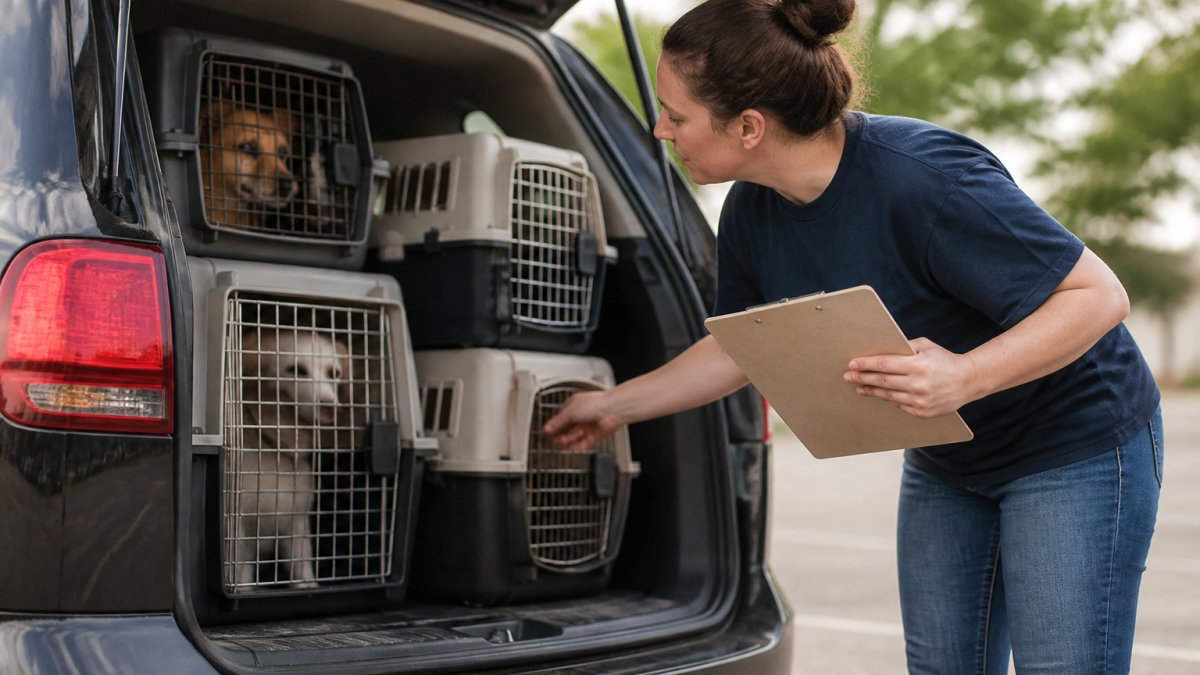
Reliable pet transport for rescues is a planned, documented, and verified process, not a favor between shelters.
Here is what most guides get wrong: they treat transport as a logistics problem. It is a trust problem first.
A rescue transfer involves three parties who rarely talk directly: the sending shelter, the receiving rescue or adopter, and the transporter. When any one of those links is weak, animals sit in limbo. They miss vet appointments. They get bounced between fosters.
So what does a solid setup actually require? What Verified Pet Transport Actually Means explains what “verified” means so you can judge which transporters are actually reliable.
- A verified carrier. Identity, insurance, and references checked before booking.
- A health certificate issued close to travel, not weeks before.
- A written schedule with pickup and delivery windows, not vague promises.
- A single point of contact who answers when something goes wrong.
- A payment method that protects you if the carrier disappears.
Get those five right and the rest is detail. Miss any one and you are gambling with a life that has already been let down once.
The USDA Animal Welfare Act regulations set the baseline for commercial animal transport in the U.S., and knowing which carriers fall under them is your first filter.
Ground Transport Options: Professional Services and Volunteer Animal Transport
Ground transport splits into two models, and they are not interchangeable. Professional services charge for reliability. Volunteer animal transport runs on donated time and fuel.
Professional ground transport means a paid carrier, often running scheduled routes between regions. You get tracking, contracts, and accountability.
Volunteer transport networks move animals through relays of drivers, each covering a leg. This is how many rescues stretch thin budgets.
Here is how they compare in practice:
| Factor | Professional Service | Volunteer Network |
|---|---|---|
| Reliability | Scheduled, contracted | Depends on driver turnout |
| Cost | Paid, quote-based | Often free or donation-funded |
| Tracking | Usually included | Rarely available |
| Best for | Long routes, tight deadlines | Short legs, flexible timing |
| Insurance | Carrier-held | Usually none |
A common mistake is booking a volunteer relay for a time-sensitive transfer.
Interstate Pet Transport for Rescues: Air vs. Ground
Interstate pet transport for rescues comes down to one question: how far, and how fast? Air travel is quicker but adds handling, crate rules, and airport logistics.
Air makes sense when:
- The distance crosses more than two days of driving
- The animal is small enough for cabin or checked pet requirements
- A receiving party can meet the flight on arrival
Ground wins when:
- The pet is large, senior, or anxious
- The route allows a direct run with minimal transfers
- You want continuous oversight by one person
Air cargo rules are strict. Most airlines require an accredited veterinary health certificate and an airline-approved crate. Cargo holds are temperature-controlled but not climate-guaranteed at every stop, which matters for flat-faced breeds.
Watch out: brachycephalic dogs and cats face real risk in air cargo. Many airlines restrict them outright. If your rescue animal has a pushed-in face, plan ground transport.
Pet Transport Company Questions to Ask Before You Book
Ask these pet transport company questions before any deposit leaves your account. The answers separate operators from opportunists.
- Are you USDA-registered, and can you show the number? Commercial carriers of animals in interstate commerce generally need registration.
- What insurance covers the animal during transit, and who files a claim?
- Will my pet ride with the same driver the whole way, or get transferred?
- How often do you send updates, and by what method?
- What is your contingency plan for a breakdown or a sick animal mid-route?
- Can you provide three rescue references from the past year?
A legitimate carrier answers all six without hesitation. For a practical framework for choosing a professional transporter to complement these questions, see The Pet Transport Network. Vague answers on insurance or transfers are your signal to walk.
Your Rescue Pet Transport Checklist: Vetting, Documents, and Payment Safety
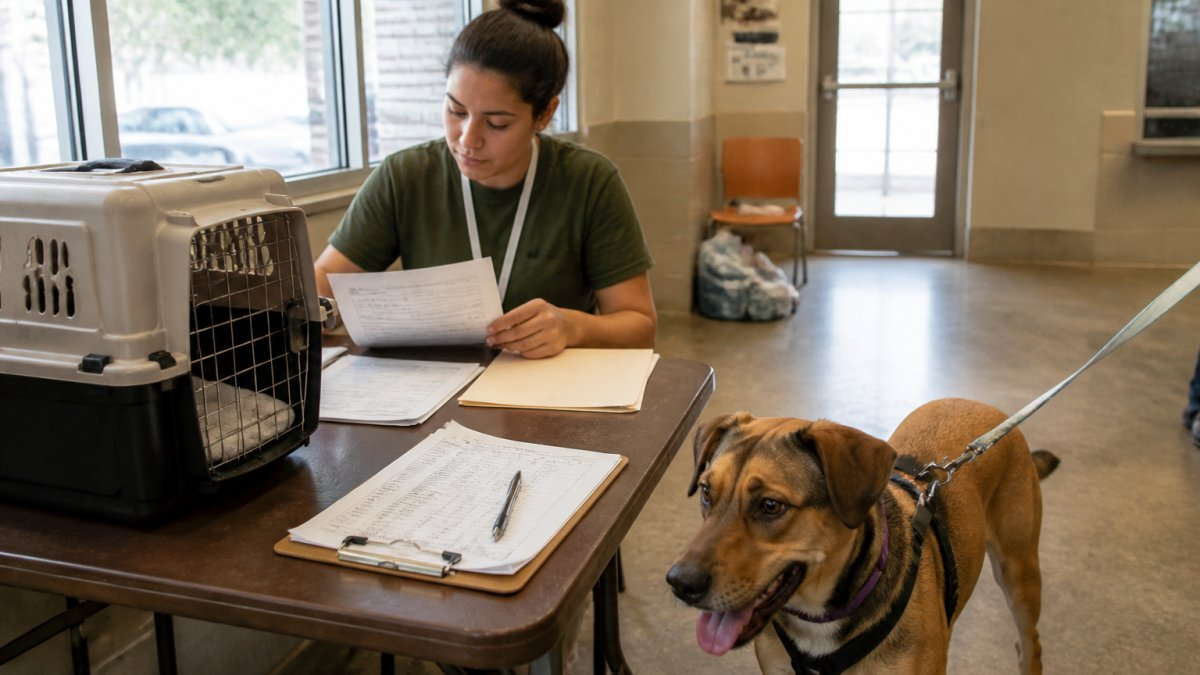
Run this rescue pet transport checklist before every transfer. It takes twenty minutes and prevents most disasters.
Vetting the carrier
- Confirm business identity and physical address
- Verify insurance and ask for the certificate
- Check at least two rescue references
- Search the business name for complaints
- Confirm USDA registration if the carrier moves animals in interstate commerce
- Ask how the animal is monitored en route and who handles a medical emergency
Rescue-specific documentation and chain of custody
- Current health certificate from a licensed vet, issued close to travel
- Vaccination records matching the animal’s microchip number
- Microchip registration transferred or updated to the receiving rescue
- Signed transfer of ownership or custody agreement between sending and receiving organizations
- Written pickup and delivery schedule with named contacts at both ends
- A single point of contact who answers when something goes wrong
Animal welfare during transit
- Crate sized so the animal can stand, turn, and lie down
- Rest stops and feeding plan agreed in advance
- Temperature control confirmed for the route and season
- Medication and stress-monitoring instructions in writing
- Maximum travel duration agreed, with an overnight plan for long runs
Payment safety
- Never pay by wire transfer or gift card
- Use a method with dispute protection
- Get the cancellation and refund terms in writing
- Hold final payment until delivery confirmation
Scam prevention matters here. Fake carriers collect deposits and vanish, and misleading credentials are common. The FTC guidance on avoiding scams applies directly: if a carrier demands payment by gift card or wire, stop.
What Pet Transport for Rescues Costs and How to Budget
Transport costs for rescues vary widely by distance, animal size, and transport model, and the biggest budgeting mistake is treating a quote as the whole cost. The transport fee is usually one line among several, and the add-ons are where rescue budgets quietly blow up.
How the three transport models price out
- Volunteer relay networks typically charge nothing for the transport itself. The real cost is fuel donations, a crate, and coordinator time. A common pattern is a suggested donation per leg to cover gas, plus the sending rescue supplying the crate and health certificate. The hidden cost is scheduling risk: a six-driver relay has six chances to fall through, and a missed leg can mean an overnight boarding fee you did not plan for.
- Nonprofit transport organizations often run on a flat requested donation per animal or per route, sometimes scaled by distance. These are usually the cheapest paid option, but availability is limited to published routes and you may wait weeks for a slot.
- Commercial ground carriers quote by distance, animal size, crate dimensions, and route. Expect the quote to be the largest single line item, and expect add-ons. Ask specifically whether the quote includes the health certificate, crate, overnight stops, and any fuel or toll surcharges.
- Air cargo adds airline fees, a USDA-accredited veterinary health certificate, an airline-approved crate, and often a cargo-terminal handling fee at each end. For flat-faced breeds, add the cost of ground transport instead, because many airlines restrict them outright.
Common add-on fees to ask about before booking
- Health certificate and pre-travel vet exam
- Crate purchase or rental if the carrier does not supply one
- Overnight boarding or foster hold during a multi-day run
- Fuel, toll, and congestion surcharges
- Late pickup or reschedule fees
- Return or cancellation fees if the receiving rescue backs out
Who typically pays
In most rescue transfers the receiving rescue or adopter covers transport, sometimes split with the sending shelter. Adopters are frequently asked to contribute a transport fee as part of the adoption cost.
Fundraising and cost-control options
- Ask the commercial carrier whether they offer a rescue or nonprofit rate; many do but do not advertise it.
- Bundle multiple animals on one route to spread the fixed cost.
- Use volunteer relays for flexible, non-time-sensitive legs and reserve paid carriers for deadline-driven moves.
- Build a small contingency fund for delays, overnight boarding, and vet stops; a cheap quote that excludes the health certificate is not cheap.
Booking Verified Transport for Your Next Rescue Transfer
Booking verified transport starts with one decision: choose the provider before you have an animal in crisis. Rescues that vet carriers in advance move animals faster and lose fewer to scheduling gaps.
Here is one way to approach it:
- Shortlist two or three verified carriers in your region
- Request quotes for your most common routes
- Run the checklist above on each
- Keep the approved list on file for the next intake
That is the difference between scrambling at midnight and making one call. You can register as a pet parent and book verified transport right away through The Pet Transport Network.
The ASPCA’s rescue and shelter resources reinforce the same point: planning beats reaction in animal welfare work.
Frequently Asked Questions
How can a rescue verify that a pet transporter is reliable?
Ask for the carrier’s USDOT number if they operate commercial vehicles, proof of current liability insurance, and their USDA registration if they handle regulated animal transport. Confirm the insurance certificate names the policyholder and is still active, then check the carrier’s record with the Federal Motor Carrier Safety Administration. Read recent reviews from other rescues, not just individual pet owners, and ask for two references you can call. A verified professional will answer these questions without hesitation; evasiveness is your first red flag.
What paperwork is needed to transport a rescue pet across state lines?
Most states require a current rabies vaccination certificate and a Certificate of Veterinary Inspection issued within a set window before travel, often 10 to 30 days depending on the destination. Puppies too young for rabies shots need an exemption letter from the vet. If the animal crosses state lines for adoption, ask your receiving rescue about any state-specific import rules and whether a health certificate must travel with the animal. Keep digital and printed copies with the carrier and the adopter.
Is professional or volunteer animal transport better for rescue animals?
Volunteer networks keep costs low and often provide more one-on-one attention, but availability depends on drivers along your route and schedules can shift. Professional services cost more yet offer insurance, tracking, and accountability when a trip goes wrong. For a single healthy adult dog on a common route, volunteer transport can work well. For puppies, seniors, medical cases, or tight adoption deadlines, a vetted professional carrier is the safer call. Many rescues use both depending on the animal.
How much does pet transport for rescues typically cost?
Pricing depends on distance, animal size, mode of travel, and whether the trip is one-way or part of a multi-animal run, so ask each provider for a written quote rather than relying on a posted rate. Budget separately for carrier fees, health certificates, and any crate purchase. Volunteer networks usually ask for a donation to cover fuel rather than a flat fee. Get at least three quotes and confirm what each one includes before you commit.
Rescue transport breaks down when trust is assumed instead of checked. If you are tired of re-vetting carriers for every transfer, The Pet Transport Network connects you with vetted independent transporters and established companies, all screened before they reach your animals. Our platform handles the verification so your team can focus on the animals, not the paperwork. Get started with The Pet Transport Network and book verified transport for your next rescue transfer with confidence.
