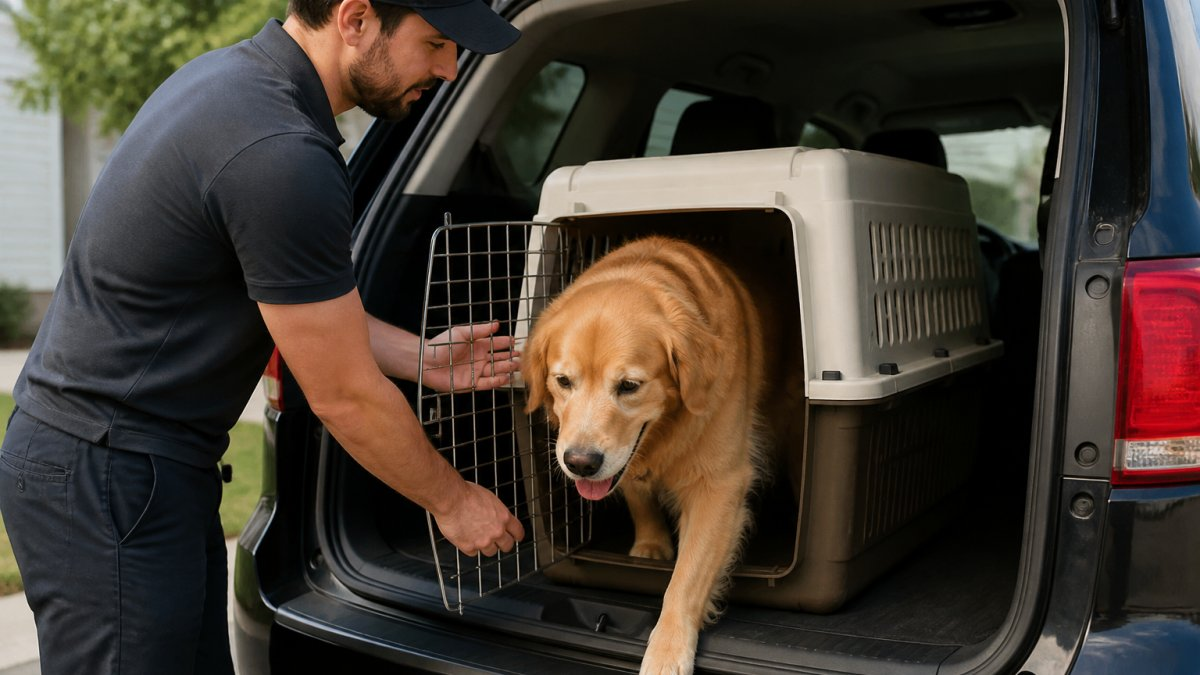
Table of Contents
- What to Look for in the Best Pet Transport Companies
- How to Choose a Pet Transport Company
- Cross-Country Pet Transport: What to Expect
- Pet Transportation Cost: Understanding Pricing
- Ground Pet Transport vs. Air Transport
- Domestic and International Pet Shipping
- Door-to-Door Service and Real-Time Communication
- Frequently Asked Questions
Last Updated: October 12, 2026
What to Look for in the Best Pet Transport Companies
The best pet transport companies in 2026 share three traits: verified credentials, transparent communication, and a commitment to animal welfare. The Pet Transport Network LLC connects pet owners with vetted transporters who treat animals like family, not cargo.
Verification and Credentials
The foundation of any reliable pet transport company is verifiable credentials: current USDA licensing when applicable, proper insurance, and documented interstate and international experience. Ask about background checks, bonding, and affiliations. Evasiveness is a red flag; the best pet transport companies share their verification status openly.
Service Coverage and Transport Options
Some companies handle ground transport only; others cover air, international relocation, and multi-leg journeys. Confirm a provider covers your route and transport type before committing.
Ground transport suits domestic moves within reasonable distances; air is necessary for coast-to-coast or international shipping. The best pet transport companies offer both, so you can match the option to your animal’s needs.
Safety Standards and Animal Welfare
This is non-negotiable. The best pet transport companies use climate-controlled vehicles, provide regular rest breaks and food and water, and have protocols for anxious or reactive animals. Ask about emergency procedures: vehicle breakdowns, mid-transport medical issues, and how they communicate when something goes wrong.
How to Choose a Pet Transport Company
Rushing into a choice based on price or convenience often leads to regret. Evaluate providers systematically.
Questions to Ask Before Booking
Start with these questions:
- What is your experience with animals like mine (breed, age, temperament, medical needs)?
- Can you provide references from recent clients?
- What is your cancellation and refund policy?
Vague responses mean keep looking.
Verification Checklist
Before booking, verify:
- Request and confirm USDA license number (if applicable)
- Verify current insurance coverage and liability limits
- Check for complaints or violations with regulatory agencies
Cross-Country Pet Transport: What to Expect
Understanding cross-country timelines and requirements helps you prepare your animal.
Timeline and Delivery Options
Cross-country pet transport timelines vary based on distance, route, and transport method. Professional providers offer expedited and standard options.
Slower transports with more rest stops reduce stress, often worth it for elderly, anxious, or medically fragile animals.
Health Certificates and Travel Requirements
Interstate and international pet transport requires a health certificate issued by your veterinarian within 10 days of travel, confirming your pet is fit to travel and current on vaccinations. Research your destination’s import requirements months in advance, some countries require quarantine, specific vaccines, microchipping, and import permits.
Pet Transportation Cost: Understanding Pricing
Here’s how quotes are built, what 2026 ranges look like, and how to spot a padded quote.
How Quotes Are Built
A legitimate quote is a sum of line items. Ask providers to break theirs into:
- Base transport fee, the cost of moving one animal on a given route, before add-ons.
- Distance and route surcharge, per-mile pricing on ground, or a flat lane rate on air.
- Crate or carrier fee, either you supply an airline-approved crate or the company provides one.
If a provider can’t itemize, the quote is padded or under-scoped.
Realistic Cost Ranges
Exact prices vary by lane, season, and provider. Pricing depends on quantity, dates, and delivery. For current prices or a quote, please visit The Pet Transport Network LLC’s website.
Ask each provider for the same route, the same dates, and the same service level (door-to-door, same crate arrangement). Apples-to-apples quotes are the only ones worth comparing.
What Drives the Price Up or Down
Five variables explain most of the spread between quotes for the “same” move:
- Distance and lane popularity. High-traffic corridors are cheaper per mile because providers can consolidate loads. Remote pickup or drop-off points add cost.
- Transport mode. Ground is usually cheaper than air for the same distance, but air saves days. Expedited ground can cost as much as air.
- Animal size and crate footprint. Weight and crate dimensions, not breed, are what carriers price on.
- Paperwork complexity. A domestic move needs a health certificate. An international move may need an import permit, rabies titer test, USDA endorsement, and destination-specific forms.
- Timing. Booking 4-6 weeks out is almost always cheaper than booking 5 days out. Holiday weeks and summer moving season carry premiums.
How to Compare Quotes Fairly
Put every quote into the same table before deciding. Capture:
| Field | Why it matters |
|---|---|
| Total price | The headline number, but only after the line items below are confirmed |
| What’s included | Crate, health certificate coordination, door-to-door, insurance, tracking |
| What’s extra | Fuel surcharges, after-hours pickup, medication administration, quarantine coordination |
| Transport mode and estimated transit time | Ground vs. air, direct vs. multi-leg |
| Insurance coverage and deductible | Declared-value limits and what’s excluded |
| Cancellation and refund terms | Deadlines, fees, and what happens if your pet can’t travel |
| Payment schedule | Deposit amount, when the balance is due, accepted methods |
A quote that looks $400 cheaper often isn’t once you add the crate, health certificate coordination, and door-to-door leg; a pricier one may include insurance and a dedicated vehicle.
Red Flags in Pricing
- A quote far below every other quote for the same lane. Either the service is shared with many animals, the insurance is minimal, or the provider is cutting corners on rest stops and climate control.
- No written quote. Verbal pricing changes. Ask for it in writing, with an expiration date.
- Large non-refundable deposits. A 50%+ non-refundable deposit shifts all risk to you.
Never wire money or pay by gift card, cryptocurrency, or peer-to-peer app to a pet transport company you haven’t verified. These payment methods are common in pet transport scams and offer no recourse.
Budgeting Beyond the Quote
Your total cost exceeds the transport fee. Plan for:
- A veterinary exam and health certificate (typically $50-$200).
- Vaccinations or titers if your pet isn’t current.
- Microchipping if not already done.
Add 10-15% to your quote as a buffer for delays, extra boarding, or last-minute document corrections.
USDA Animal and Plant Health Inspection Service pet travel requirements
Getting Transparent Quotes
Request quotes from at least three providers using identical parameters, and ask each to explain differing line items. When one quotes $500 and another $1,200 for the same route, the gap usually comes down to transport mode, whether the crate and insurance are included, and whether the service is shared or private.
Ground Pet Transport vs. Air Transport
The choice depends on distance, timeline, and temperament.
When Ground Transport Makes Sense
Ground transport works well for moves under 1,000 miles, flexible timelines, and animals that handle vehicle travel well. It’s typically cheaper than air with fewer regulatory requirements, but a cross-country ground transport takes a week or more, which may not fit a tight timeline and can stress anxious animals.
Airline-Approved Care and Air Options
Air transport completes cross-country moves in 1 to 2 days, but costs more and involves complex logistics: airline-approved crates, health requirements, and airline-specific rules.
Not all animals are good air candidates.
The best pet transport companies offering air service know these nuances and guide you to the right choice.
Domestic and International Pet Shipping
Domestic and international pet shipping share a backbone, health documentation, an approved crate, a verified provider, but diverge on paperwork, lead time, and risk.
Domestic vs. International: Side-by-Side
| Factor | Domestic (within the U.S.) | International |
|---|---|---|
| Typical lead time | 2-6 weeks | 4-6 months (some destinations longer) |
| Core document | USDA-accredited vet health certificate, issued within 10 days of travel | Health certificate, plus destination-specific import permit and endorsements |
| Vaccinations | Rabies and core vaccines current | Rabies almost always required; some destinations require a rabies titer test |
| Microchip | Recommended | Usually required, and must be implanted before the rabies vaccine to be valid |
| Quarantine | None | None for some destinations; weeks to months for others |
| Transport modes | Ground, air, or a combination | Air almost always; ground for contiguous-country moves |
| Regulatory body | USDA APHIS for interstate movement of certain species | USDA APHIS for export endorsement; destination-country authority for import |
| Breed restrictions | Airline-specific for brachycephalic breeds | Airline-specific plus destination-country breed rules |
| Cost band (single pet) | Roughly $300-$3,500 depending on distance and service level | Roughly $2,000-$7,000+ per animal |
The single biggest difference is lead time. Domestic moves can be arranged in weeks; international moves need months, and the clock starts with the microchip and rabies vaccine, not with the flight booking.
Domestic Transport Across the Country
Domestic moves involve fewer hurdles: a current health certificate from a USDA-accredited veterinarian and compliance with destination-state regulations. Some states have extra entry requirements for certain species, check the state department of agriculture before booking. Most domestic moves use ground transport or a ground-air combination with one coordinator managing the journey.
International Pet Relocation and Import Requirements
International pet transport is more complex. Your destination country determines what’s required, and requirements change frequently. Common requirements include:
- Microchipping with an ISO-compliant 15-digit chip.
- Rabies vaccination administered after the microchip, with a valid certificate.
- Rabies titer test for many destinations, often with a waiting period after the test before travel.
Some countries require 6+ months of advance planning or quarantine on arrival. The best pet transport companies know your destination and guide you through every requirement.
A microchip implanted after the rabies vaccine can invalidate the vaccination for international travel (the CDC). Sequence matters: chip first, then vaccine, then titer if required.
End-to-End Preparation Timeline
Work backward from your travel date. This timeline assumes an international move; domestic moves compress each step.
6 months before travel
- Confirm your destination country’s import requirements on the destination authority’s website and on USDA APHIS.
- Have your pet microchipped (ISO 15-digit) if not already done.
- Update rabies vaccination and any other required vaccines.
4 months before travel
- Apply for the destination-country import permit if required.
- Confirm crate size and type against the airline’s and destination’s rules.
- Book your transport slot; peak-season slots fill early.
2 months before travel
- Schedule the pre-travel veterinary exam.
- Confirm all vaccinations are current and documented.
- Begin crate training at home.
10 days before travel
- Veterinary exam and health certificate issued (within 10 days of travel for most destinations).
- Submit the health certificate to USDA APHIS for endorsement if required.
- Confirm pickup time, contact numbers, and tracking access with your provider.
Travel day
- Withhold food per your vet’s and the airline’s guidance; water access is typically allowed.
- Provide the transporter with a written medication schedule, feeding instructions, and emergency contacts.
- Confirm the destination contact is ready to receive your pet.
Build a single folder, physical and digital, with the microchip number, rabies certificate, titer results, import permit, health certificate, and USDA endorsement. Every checkpoint in the journey will ask for one of these.
Choosing Between Domestic and International Providers
Not every provider handles both: domestic ground specialists often skip international paperwork, and international relocation companies may not offer regional ground routes. Ask:
- Do you handle the destination country’s import permit, or do I?
- Do you coordinate the USDA endorsement, or do I?
- Who is my point of contact if a document is rejected at the border?
A provider who answers without hesitation has done this before; one who defers every question is just a booking agent.
Start international planning 4 to 6 months before your move; rushing leads to delays, missed deadlines, and potentially stranded animals.
Door-to-Door Service and Real-Time Communication
A smooth transport usually comes down to communication and transparency during the journey.
What Happens During Transport
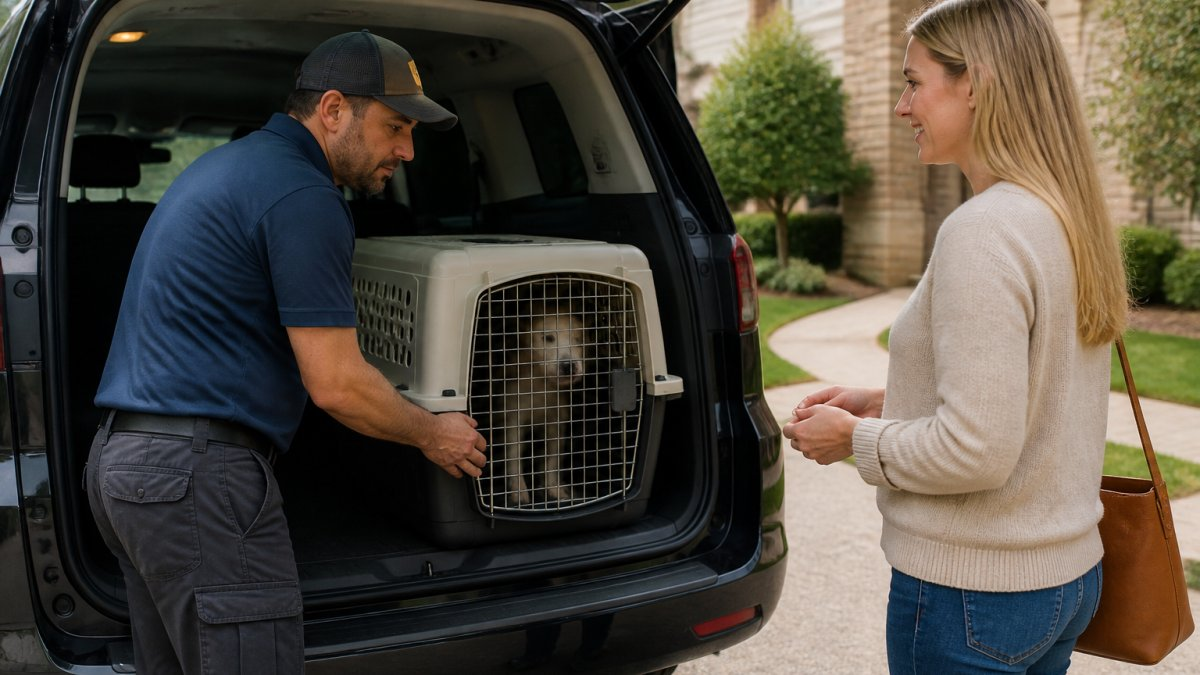
Door-to-door service means pickup from your home and delivery directly to your destination, eliminating facility drop-offs or neutral meeting points. During transport, your pet should get regular breaks, food and water, and climate control.
Professional transporters log rest stops, feeding times, and behavioral observations, so you know how your pet handled the journey.
Tracking, Updates, and Emergency Support
The best pet transport companies provide GPS tracking, photo updates, and direct communication with the transporter, so you know where your pet is and get delay alerts.
Choosing the best pet transport company 2026 means prioritizing your pet’s safety and your peace of mind: verify credentials, ask detailed questions, compare transparent quotes, and pick a provider that communicates clearly.
Frequently Asked Questions
How do I know if a pet transport company is actually verified and safe?
Verified pet transport providers should have USDA licensing (for interstate transport), current liability insurance, and bonding documentation. Ask for proof of credentials before booking. Check references from recent clients, and confirm the company maintains a clean safety record. Many best pet transport companies publish their verification status and customer reviews prominently. Request documentation of background checks and driver qualifications. A reliable provider will provide this information without hesitation and explain their vetting process clearly.
What factors determine pet transportation cost?
Pet transportation cost depends on distance, pet size, transport method (ground vs. air), and special care requirements. Cross-country ground pet transport may have different pricing structures than shorter routes, and airline-approved air transport may also have different pricing structures. Seasonal demand, fuel costs, and the provider’s experience level also affect quotes. Door-to-door service usually costs more than drop-off options. Request quotes from multiple providers to compare. The Pet Transport Network can help you get transparent estimates based on your specific relocation needs.
How long does cross-country pet transport typically take?
Cross-country pet transport timelines vary based on distance, route, and transport method. Ground transport across the country usually takes 3-7 days depending on the route and number of stops for animal care. Air transport is faster but may require additional ground transport to and from airports. The timeline also depends on health certificate processing and any import requirements. Professional providers offer expedited and standard options. Discuss your timeline when getting a quote, and confirm realistic delivery windows before booking.
What should I ask a pet transport company before booking?
Before booking, ask about USDA licensing, insurance coverage, driver experience with your pet type, and their emergency protocol. Request details on how often your pet will be checked during ground transport, what accommodations are provided, and how you’ll receive updates. Ask about their cancellation policy, what happens if delays occur, and who is responsible if your pet gets sick or injured. Confirm they understand any special needs your pet has, such as anxiety or dietary requirements. Get everything in writing, including the quoted price and delivery timeline.