Table of Contents
- Safe Car Travel for Dogs: Choosing the Right Restraint or Crate
- How to Calm a Dog in the Car Before You Even Leave the Driveway
- Tailoring Your Plan to Different Forms of Dog Travel Anxiety
- Dog Travel Anxiety Medication: What a Veterinarian Needs to Know
- How Often to Stop on a Road Trip with a Dog: Building a Rest Schedule
- Recognizing Distress, Motion Sickness, and When to Change the Plan
- Conclusion: A Calmer Ride Starts With Preparation
- Frequently Asked Questions
Last Updated: October 14, 2026
Safe Car Travel for Dogs: Choosing the Right Restraint or Crate
Safe car travel for dogs starts with one decision: how you will hold your dog still if the brakes slam. At The Pet Transport Network LLC, we understand this question constantly from owners planning long moves.
Three categories cover almost every case, and each has a specific failure mode you need to plan around:
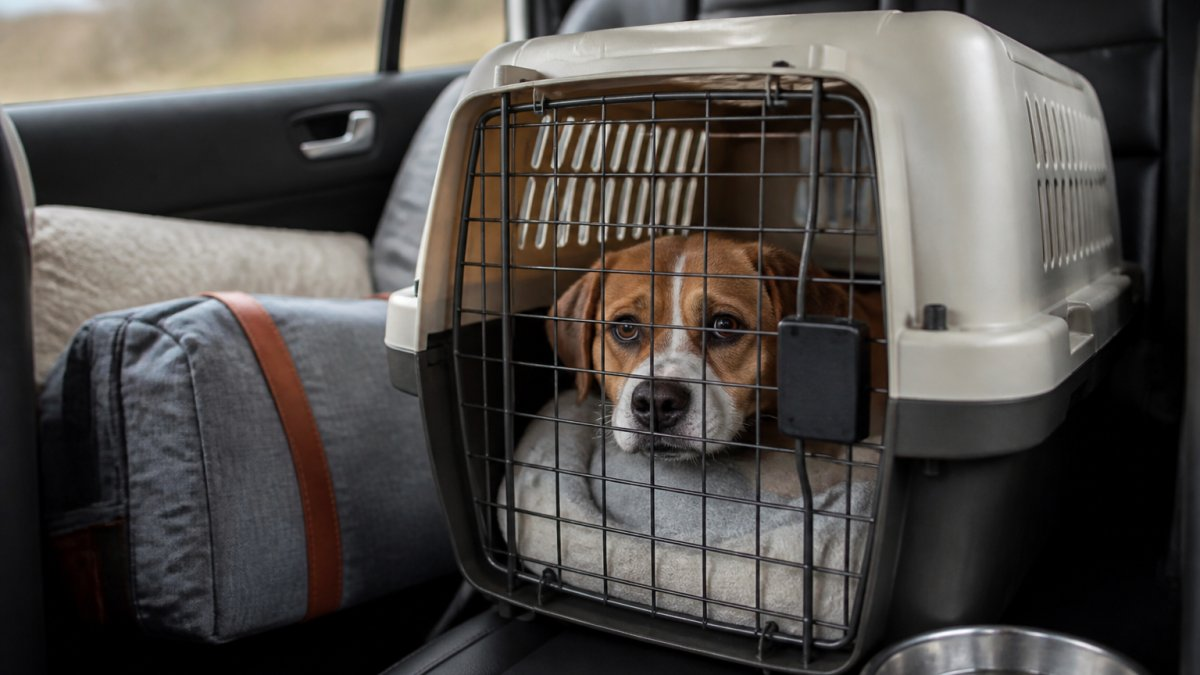
- Crash-tested crate: Best for dogs who already accept crate training. A crate contains your dog fully and prevents them from interfering with the driver. The failure mode is size: a crate that is too large lets your dog slide on turns, and a crate that is too small prevents them from standing or turning around.
- Travel harness with seat belt: Best for dogs who panic in crates. A harness lets your dog sit up, lie down, and look out the window. The failure mode is fit: a loose harness can allow the dog to slip free or concentrate crash force on the chest instead of distributing it.
- Carrier: Best for small dogs under about 20 pounds. A carrier doubles as a bed at rest stops and fits in a footwell or on a seat. The failure mode is crash protection: most soft-sided carriers are not tested to any standard, so treat them as containment, not as a crash safety device.
The Center for Pet Safety crash test program tests restraints and publishes which ones hold up under simulated crash conditions. Look for that certification before you buy anything.
Crash-Tested Crates vs. Travel Harnesses: Which Is Safer?
A crash-tested crate wins on pure safety, but only if your dog will actually ride in it. A harness wins on comfort for dogs who fight containment.
| Option | Best For | Main Weakness | Space Cost |
|---|---|---|---|
| Crash-tested crate | Dogs comfortable in crates | Takes up cargo space | High, full crate footprint |
| Travel harness | Dogs who hate crates | Must fit snugly to work | Low, one seat |
| Carrier | Small dogs | Limited crash protection | Low, footwell or seat |
A common mistake is buying a crate one size too big. Your dog should be able to stand, turn, and lie down, nothing more.
For harnesses, fit matters more than brand. The harness should be snug against the body with no more than two fingers of slack under any strap, and the attachment point should sit low on the chest, not on the throat.
How to Secure a Crate or Carrier Inside Your Vehicle
Securing the crate matters as much as choosing it. An unsecured crate becomes a heavy box in a crash, and a crate held only by a seat belt through the handle can rotate or slide on impact.
Follow these steps:
- Thread the vehicle seat belt through the crate’s handle or built-in straps, then buckle it and pull the slack tight.
- Push the crate against the back seat, never on top of it, so the seat back absorbs forward motion.
- For larger crates, anchor with straps rated for the crate’s weight plus the dog’s weight, a 40-pound dog in a 20-pound crate needs straps rated for at least 60 pounds of static load.
- Skip the cargo area unless you use a barrier rated for your dog’s size. An unrated barrier can fail and let the crate slide into the passenger cabin.
- Check the crate before every leg of the trip. Straps loosen, buckles shift, and a crate that was secure at the start of the day may not be secure after four hours of driving.
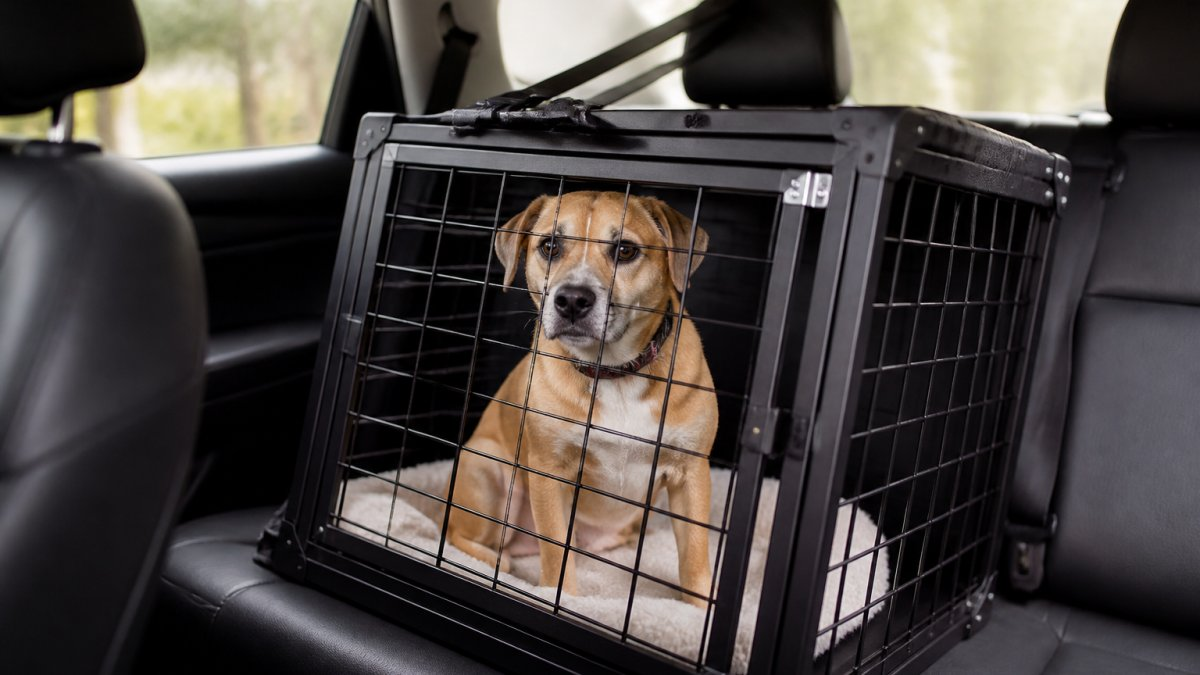
If your dog is between crate sizes, size down for travel and size up for home. A travel crate should be snug enough to limit sliding, while a home crate can be roomier for daily comfort.
How to Calm a Dog in the Car Before You Even Leave the Driveway
Calming a dog in the car begins weeks before departure, not on the morning you leave. Dogs learn through repetition, so short, boring practice rides do more than any single trick.
A common approach is to pair the car with something your dog loves. Feed meals near the vehicle. Toss treats inside with the engine off. Then take a two-minute drive around the block.
End every practice ride somewhere good, like a park or a friend’s driveway. If every trip ends back home, your dog learns the car only leads to nothing.
A 4-Week Pre-Trip Desensitization Timeline
A gradual introduction beats a crash course. Here is a timeline often suggested to owners preparing for a long-distance move:
- Week 1: Sit in the parked car with your dog. Treats, no engine.
- Week 2: Two-minute drives around the block, twice daily.
- Week 3: Ten-minute drives to pleasant destinations.
Short practice rides build the habit. Skip a week and you will likely start over.
Tailoring Your Plan to Different Forms of Dog Travel Anxiety
Not all travel anxiety looks the same, and the fix differs by type. A dog who drools and vomits needs a different plan than a dog who barks and paces.
Three common patterns:
- Motion sickness: Usually physical, not emotional. Often improves with age and short rides.
- Separation-type anxiety: Your dog panics when confined and alone. Gradual crate training helps most.
- Noise and motion fear: Brakes, wipers, and trucks trigger panic. Desensitization to sounds helps.
Match the plan to the pattern. A crate will not fix motion sickness, and a calming toy will not fix confinement panic.
Dog Travel Anxiety Medication: What a Veterinarian Needs to Know
Dog travel anxiety medication is a decision for your veterinarian, not a forum thread. Bring specific details to the appointment: how your dog reacts in the car, how long the trip lasts, what you have already tried, and whether your dog has any health conditions that affect drug metabolism. A veterinarian who knows your dog’s full history can match a medication to the dog, not to the symptom.
Prescription Options, Supplements, and What They Actually Do
Prescription medications for travel anxiety generally fall into two groups:
- Fast-acting options for the day of travel: These are given shortly before departure and are designed to reduce panic during a defined window. They do not treat underlying anxiety between trips, and they may cause drowsiness or unsteadiness, so a trial at home before the trip is essential.
- Daily medications for ongoing anxiety: These build up in the system over days or weeks and are used when anxiety is not limited to car travel. They are not a same-day solution and require planning weeks ahead of a move.
Your veterinarian will match the choice to your dog’s health history, weight, and other medications. Some common human anti-anxiety drugs are toxic to dogs, and doses differ by weight and species, so never give your dog human medication or leftover prescriptions from another pet.
Supplements sold without a prescription vary widely in quality. Some owners report mild calming effects from ingredients like L-theanine, chamomile, or dog-specific pheromone products. Others see nothing.
Never give your dog human anti-anxiety medication or leftover prescriptions from another pet. Doses differ by weight and species, and some common human drugs are toxic to dogs.
Ask your veterinarian for a trial dose at home at least one week before departure. A medication that makes your dog worse, not calmer, is better discovered on the couch than at a highway rest stop.
Before a long trip, ask your veterinarian about a health check, current vaccinations, and any paperwork you may need. If you are crossing state lines, some states require a health certificate, so confirm the rules for your route with USDA Animal and Plant Health Inspection Service. Carry a copy of your dog’s vaccination records and any prescription labels with you, not just in a bag in the trunk.
What to Bring to the Veterinary Appointment
A productive pre-trip visit takes about 15 minutes of preparation. Bring:
- A written log of how your dog reacts in the car, panting, drooling, vomiting, barking, pacing, or freezing.
- The total drive time and the longest single leg between stops.
- A list of every medication, supplement, or topical product your dog currently takes.
- Your dog’s weight, ideally measured the same week as the appointment.
- Any prior bad reactions to sedation or anesthesia.
With that information, your veterinarian can recommend a plan that fits the trip rather than a generic sedative. For dogs who cannot tolerate medication or whose anxiety is too severe for a long drive, a vetted transport provider may be the safer option. The Pet Transport Network LLC connects you with verified transporters who handle anxious animals as part of their regular work.
How Often to Stop on a Road Trip with a Dog: Building a Rest Schedule
Plan a stop every two to three hours for adult dogs. Puppies, senior pets, and dogs on medication need more frequent breaks, often every 60 to 90 minutes.
Build the schedule around your dog, not your GPS:
- Bathroom break: Every stop.
- Water: Small amounts at each break, not a full bowl.
- Exercise: A five-minute walk at longer stops.
A steady feeding schedule reduces motion sickness. Feeding a large meal right before a long drive is the most common cause of vomiting on the road.
Keep food and water bowls, familiar bedding, and a favorite toy within reach. Comfort items do more for stress than any gadget.
Recognizing Distress, Motion Sickness, and When to Change the Plan
Watch for early signs, not just obvious ones. Heavy panting, drooling, lip licking, and pacing all signal rising stress.
If distress escalates:
- Pull over safely and let your dog settle.
- Offer water and a short walk.
- Check the crate or harness for fit issues.
- Call your veterinarian if symptoms continue.
Motion sickness often shows up as vomiting, drooling, and lip smacking. Senior pets and puppies are more prone to it.
For owners who cannot manage the drive themselves, a vetted transport provider removes the stress entirely. The Pet Transport Network LLC connects you with verified transporters.
Conclusion: A Calmer Ride Starts With Preparation
Long-distance travel with anxious dogs is a planning problem, not a training problem.
Start desensitization a month out. Choose a crash-tested restraint and fit it properly. Talk to your veterinarian about medication and health paperwork early.
If the drive itself is not realistic, The Pet Transport Network LLC can help. Our platform connects you with vetted independent transporters and established transport companies.
Frequently Asked Questions
Should I use a crate or a seat belt for an anxious dog in the car?
It depends on your dog’s temperament. A crash-tested crate gives a dog that panics in open spaces a contained, den-like environment, which can reduce stress. A travel harness with a seat belt attachment works better for dogs that tolerate confinement poorly or have outgrown their crate. Whichever you choose, secure it to the vehicle, not just to the seat. Test both options on short practice rides before a long-distance trip so you know which one keeps your dog calm and safe.
How often should I stop when traveling long distance with a dog?
Plan a stop every two to three hours. Each break should last 15 to 20 minutes so your dog can relieve itself, drink a small amount of water, and walk around to stretch. On a 10-hour drive, that adds roughly two hours of total travel time, so build it into your schedule rather than rushing. Anxious dogs often need the first stop sooner, so watch for restlessness and stop earlier if needed.
Can dogs take medication for travel anxiety?
Yes, but only under veterinary guidance. A veterinarian may prescribe anti-anxiety medication or recommend over-the-counter options like calming chews, depending on your dog’s health history and the severity of its anxiety. Never give a dog human medication or leftover prescriptions from another pet. Schedule a health check at least two weeks before your trip so your vet has time to assess your dog, run any needed tests, and adjust the dosage if the first trial does not work as expected.
What should I pack when traveling long distance with a dog?
Pack your dog’s regular food and a collapsible food bowl, a water bowl and bottled water, any medication, a leash and harness, waste bags, and a health certificate if you are crossing state lines. Bring familiar bedding, a favorite toy, and healthy treats to create positive associations at rest stops. Keep a towel and pet-safe cleaning wipes within reach for motion sickness. If a professional transport provider is handling the drive, confirm what supplies are needed so you only send what is necessary.