Table of Contents
- What Vetted Ground Transport for Pets Means
- How to Find a Pet Shipper You Can Trust
- Questions to Ask a Pet Transporter Before Booking
- Pet Transport Safety Checklist: What to Verify
- Pet Ground Transport Cost: What Affects Your Quote
- Incident Response and Contingency Planning
- Ground Versus Air Transportation: When to Choose Ground
- Frequently Asked Questions
Last Updated: October 18, 2026
What Vetted Ground Transport for Pets Means
A vetted transporter has passed real checks: background screening, insurance verification, reference review, and vehicle inspection. At The Pet Transport Network LLC, we connect you with a trusted network of vetted independent transporters and established transport companies.
Hiring a stranger from a ride-share platform or classified ad leaves you with almost no recourse if something goes wrong. A vetted transporter gives you documentation, accountability, and professional standards.
How to Find a Pet Shipper You Can Trust
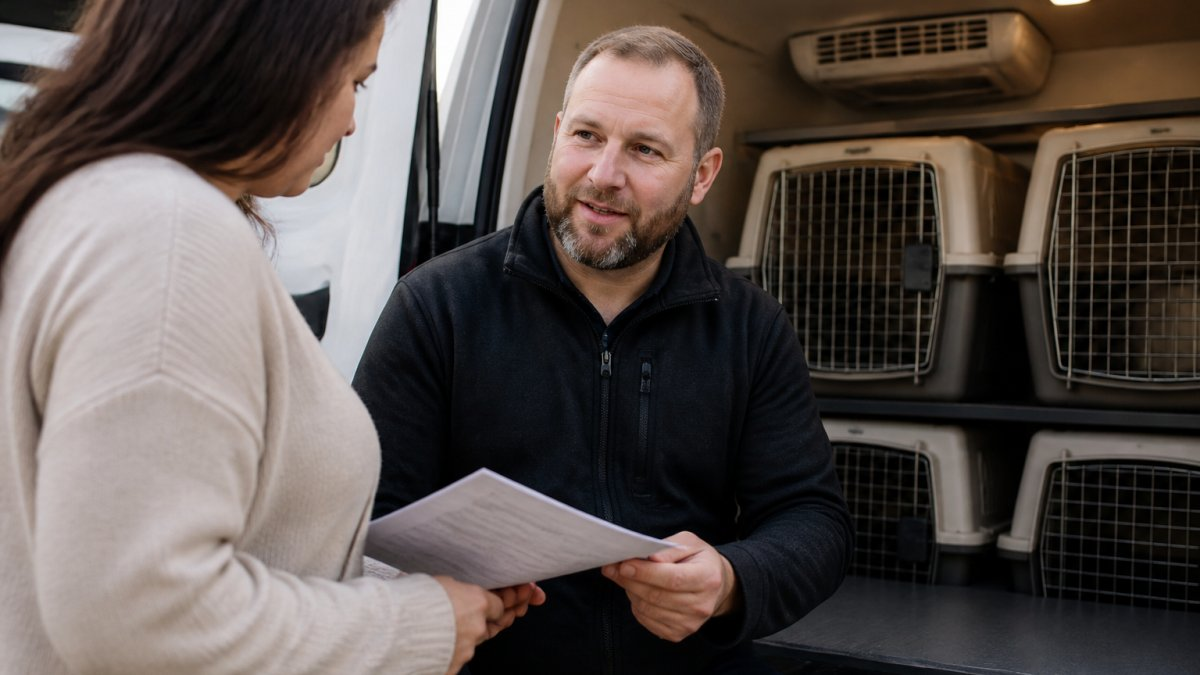
Finding a trustworthy pet shipper is about independent verification, not gut feeling. The right transporter welcomes questions and hands over documentation; the wrong one deflects. Move past marketing language and confirm the claims yourself.
Verify Insurance, Not Just the Word “Insured”
“Fully insured” is a phrase, not proof. Ask for the certificate of insurance and read it. Look for:
- Commercial auto liability covering the vehicle used for transport, a personal auto policy often excludes commercial hauling of animals for hire.
- General liability coverage for the business.
- Cargo or bailee coverage for the animals in their care, if offered. Not every transporter carries it; ask directly and note the answer.
- The named insured matching the company or driver you’re actually hiring, not a parent company or an unrelated entity.
If the transporter operates through a broker or network, ask whose insurance responds if something happens during your pet’s trip. The answer should be specific, not “we’re covered.”
Confirm Licensing and Business Standing
Pet ground transport is regulated unevenly, so no single federal license is required. Verify:
- Business registration, ask for the legal business name and confirm it through the state’s business entity search.
- USDOT number, if the transporter operates commercial vehicles above the weight thresholds that require registration with the Federal Motor Carrier Safety Administration (FMCSA). You can look up a USDOT number in the FMCSA’s public database.
- State-level requirements, some states require transport businesses to register or carry specific permits. Ask the transporter which apply to them and confirm.
A legitimate operator will know their own registration status. Evasiveness here is a serious signal.
Check References the Right Way
Two references on a website prove nothing. Ask for clients who shipped a pet similar to yours, same species, size, and route length, within the last six months. When you call, ask:
- Was the pickup and delivery window honored, or did it slip?
- How often did you get updates, and were they proactive or only on request?
- Did the vehicle match what was described at booking?
- If anything went wrong, how did the transporter handle it?
A reference who can’t recall details is probably a courtesy reference. One who describes a specific problem and its resolution is worth ten glowing testimonials.
Ask About Subcontractors Before You Book
Many transporters book pets onto other drivers’ vehicles, especially on long routes or in peak season. Ask directly: Will the person driving my pet be you, an employee, or a subcontractor? If a subcontractor is involved, ask for that driver’s insurance and background-check status too, company vetting doesn’t transfer to a driver you’ve never heard of.
A Practical Transporter-Vetting Checklist
Use this checklist before booking any pet ground transport service, and keep the supporting documents:
- Certificate of insurance received and reviewed (commercial auto, general liability, cargo/bailee if offered)
- Named insured matches the company or driver you’re hiring
- Business registration confirmed through the state entity search
- USDOT number provided and looked up in the FMCSA database, if applicable
- At least 2 references from clients with similar pets and routes, contacted directly
- Vehicle inspection documented (photos of interior, carriers, climate control, restraint systems)
- Written service agreement with clear pickup and delivery windows
A transporter who refuses to provide an insurance certificate, references, or a written agreement before you pay a deposit is not vetted, regardless of what the website says. Walk away.
Questions to Ask a Pet Transporter Before Booking
Before you commit, have a real conversation. The questions that matter most:
“How long have you been transporting pets, and what types of animals do you typically work with?” A transporter who’s moved 500 dogs but never a cat might not understand feline stress responses.
“What happens if you get sick or your vehicle breaks down during transport?” Do they have a backup driver?
“Can you provide references from recent clients?” Contact at least two and ask: Was the pet delivered safely?
“What’s your cancellation and refund policy?” Life happens.
“Do you provide real-time updates during transport?” GPS tracking or scheduled phone calls reduce anxiety.
Pet Transport Safety Checklist: What to Verify
Safety isn’t optional. Before your pet gets in any vehicle, verify these elements:
Vehicle Safety and Monitoring Standards
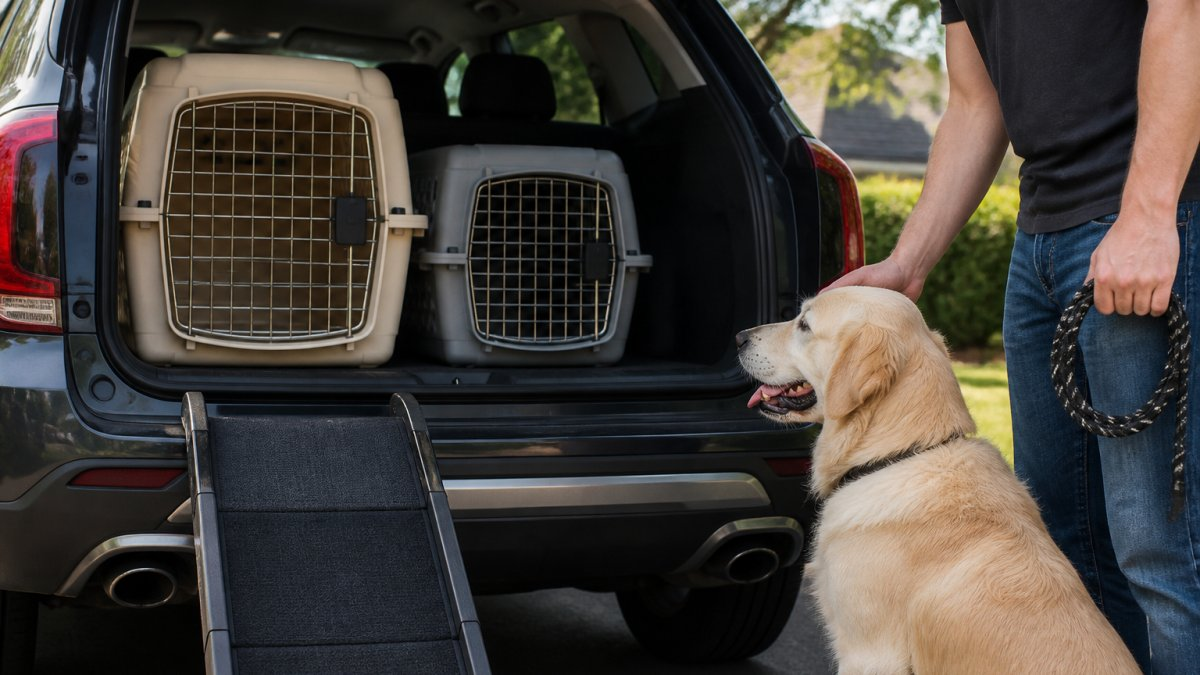
The vehicle matters as much as the driver. Passenger vehicles can work for short trips if properly equipped; specialized pet transport vans offer more space, better climate control, and dedicated containment systems.
Check that the vehicle has:
- Working air conditioning and heating with independent controls
- Proper ventilation (not just a cracked window)
- Secure pet carriers or crates that won’t slide during braking
- Emergency supplies: water, bowls, paper towels, first aid kit
- GPS tracking or regular communication protocol
Ask the transporter to show you photos of their vehicle’s interior. If they’re reluctant, that’s a signal to look elsewhere.
Health Certificates and Veterinary Requirements
States have different rules for transporting animals across state lines. Most require a health certificate from a licensed veterinarian within 10 days of transport; some require a Certificate of Veterinary Inspection (CVI). International transport requires additional documentation.
Before booking, confirm:
- What health documentation your state requires
- Whether the transporter handles paperwork or if you’re responsible
- Which veterinarian to visit (some transporters have preferred vets)
- How far in advance you need to schedule the vet appointment
The transporter should know these requirements cold. If they don’t, they’re not experienced enough.
Pet Ground Transport Cost: What Affects Your Quote
Ground transport pricing is where pet owners get the least transparency. Two transporters can quote the same 900-mile route hundreds of dollars apart, from different service models, insurance levels, and driver time. Understanding how a quote is built lets you compare apples to apples.
The Line Items a Real Quote Should Break Out
Ask every transporter to itemize the same categories so you can stack quotes side by side. A transparent quote separates:
- Base mileage charge, a per-mile rate applied to the loaded route, not the driver’s deadhead miles to reach you. Ask which miles you’re paying for.
- Pickup and delivery windows, whether the quoted price assumes a flexible window (cheaper) or a guaranteed date and time (usually a premium).
- Overnight and layover care, multi-day routes require the driver to stop, and the pet to be fed, walked, and supervised. Some transporters fold this into the mileage rate; others bill it as a per-night fee. Get the number.
- Veterinary paperwork handling, whether the transporter coordinates the Certificate of Veterinary Inspection (CVI) and health certificate or leaves that entirely to you. If they handle it, there’s usually a service fee.
- Special handling add-ons, medication administration, climate-controlled compartments, extra stops, or a private (non-shared) vehicle.
- Deposit and balance terms, how much is due at booking versus delivery, and whether the deposit is refundable.
- Cancellation and rescheduling fees, the dollar amount and the cutoff window, in writing.
If a quote arrives as a single lump sum, ask for itemization before comparing it to anyone else. A transporter who won’t break it down is telling you something.
Why Per-Mile Rates Aren’t Comparable at Face Value
Comparing headline per-mile rates is a common mistake. A lower per-mile rate on a shared route can cost more in total than a higher rate on a private route, because shared transport adds days, and days add overnight care and scheduling risk.
A practical approach: convert every quote to a total delivered cost, mileage plus overnight care plus paperwork fees plus any add-ons, and compare that number against the delivery window each transporter promises.
Red Flags in a Quote
- A price dramatically below every other quote, with no explanation of what’s excluded.
- No written cancellation or refund terms.
- Reluctance to state whether the deposit is held in a business account versus a personal one.
- A quote that changes after you ask basic questions about insurance or vehicle setup.
Before you pay a deposit, ask the transporter to send the itemized quote and the cancellation terms in the same email. Having both in writing is what lets you hold them to the number later.
What Drives the Price Up or Down
Distance is the biggest lever, but not the only one. Longer routes often carry a lower per-mile rate, while short local runs can carry a minimum charge. Pet count and size matter, some price per animal, others per transport, and a large-breed dog in a private vehicle costs more than a small dog shared.
The goal isn’t to find the cheapest quote. It’s to find the quote whose total delivered cost, delivery window, and included services you can actually verify before money changes hands.
Incident Response and Contingency Planning
A professional transporter should have answers before a problem occurs.
Ask how they handle a pet refusing to eat, an accident, a medical emergency, or a severe weather delay.
Get these commitments in writing, a verbal promise doesn’t help if the transporter disappears after an incident.
Also ask: If the transporter becomes unable to complete the journey, who takes over? Is there a backup driver?
Ground Versus Air Transportation: When to Choose Ground
Ground and air transport both move pets long distances, but suit different situations.
Ground transport works best for:
- Pets with anxiety or health conditions aggravated by flying
- Shorter distances (under 1,500 miles)
- Pets requiring frequent breaks and personalized attention
- Owners who want real-time updates and driver communication
- Domestic moves within the continental U.S.
Air transport works best for:
- International relocations
- Very long distances where ground transport would take a week or more
- Pets in good health with no flying contraindications
- Owners who prioritize speed over personal communication
Ground transport offers more flexibility, lower stress for anxious pets, and direct communication with the transporter. Air transport is faster but requires airline-approved carriers, health certificates, and less personal oversight.
For most domestic relocations, ground transport is the safer, less stressful choice.
Booking vetted ground transport for pets protects your animal and gives you peace of mind.
Frequently Asked Questions
How do I verify that a pet transporter is actually vetted before booking?
Ask for proof of insurance, bonding, and background check results. Check references from previous clients. Reputable transporters should provide credentials willingly and explain their vetting process. Request to see their vehicle inspection records and ask about GPS tracking capabilities. A vetted transporter will have documented safety protocols and be transparent about their qualifications and experience with your pet type.
What factors affect pet ground transport cost the most?
Distance, pet size and weight, and pickup/delivery location accessibility are primary cost drivers. Specialized accommodations for anxious or elderly pets, multi-stop routes, and rush scheduling increase pricing. Whether you book private transport (dedicated vehicle) or shared transport (multiple pets) also affects the quote. Health certificate requirements and any special handling needs add to the total. Contact transport providers directly for current pricing based on your specific route and pet needs.
What health certificates and vaccination records does my pet need for ground transport?
Most ground transporters require proof of current vaccinations, particularly rabies. A Certificate of Veterinary Inspection (CVI) may be required for interstate travel, depending on state regulations. Your veterinarian can provide this documentation, which is typically valid for 10 days. Some transporters request a health clearance from your vet confirming your pet is fit to travel. Keep copies of all records with you during transport. Requirements vary by state, so confirm with your transporter and destination state regulations before booking.
What should I do if something goes wrong during pet transport?
Vetted transporters should have liability coverage and a documented incident response plan. Ask about their coverage limits and what happens if your pet becomes ill or there’s an accident. Most reputable providers carry insurance and have protocols for emergency veterinary care. Ensure you have real-time contact information and understand how delays or issues will be communicated to you. Request a written service agreement that outlines contingency procedures, responsibility, and compensation in case of problems. Always ask these questions before booking.